

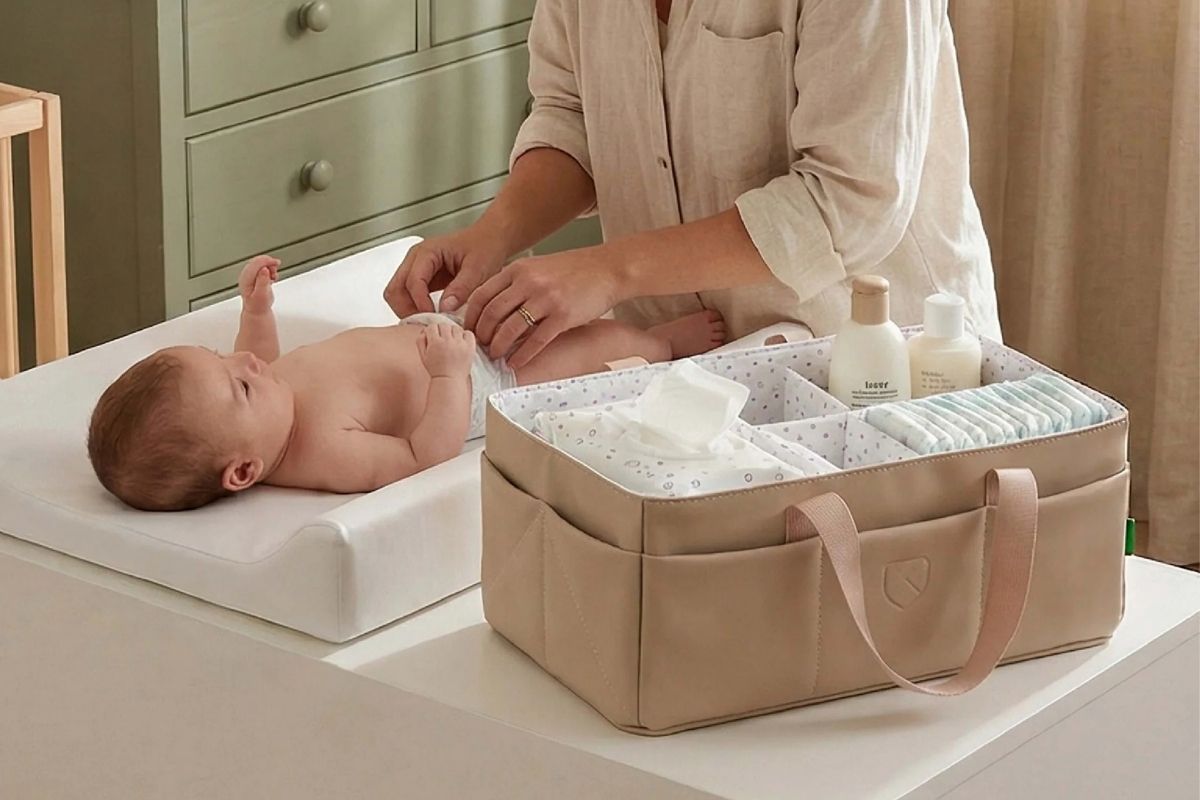
In short: On your changing table you need a stable changing mat, nappies, water with cotton pads or baby wipes, a barrier cream, muslins, spare clothes and a nappy bin. Keep everything within reach so one hand is always on your baby. A wipe warmer and a pile of toiletries are not essential.
Author: Eva Birsa, mum and co-founder of Evitas · Updated: 27 September 2026
The changing table is where you change nappies, wash your baby, care for their skin and share the first moments of bonding. This checklist helps you set it up without buying things you don't need.
Changing table checklist
| Item | Category | Tip |
|---|---|---|
| Changing mat | Essential | Non-slip, waterproof, sitting fully on the table. Changing mats |
| Nappies | Essential | A stock in the right size; don't buy too many of one size at first. Nappies |
| Baby wipes or water and cotton pads | Essential | For sensitive skin choose wipes with a high water content. Baby wipes |
| Nappy barrier cream | Essential | E.g. Linea MammaBaby SOS Baby zinc cream. Baby toiletries |
| Muslins | Essential | For covering, wiping and protecting the mat. Muslins |
| Spare clothes (bodysuits) | Essential | Two or three in the drawer under the table. |
| Nappy bin | Essential | With a lid, within reach. Nappy bins |
| Nail scissors or file | Nice to have | With rounded tips, e.g. Fridababy Easy Grip. |
| Saline spray and nasal aspirator | Nice to have | For a blocked nose, e.g. Fridababy saline spray. |
| Gentle intimate wash foam | Nice to have | E.g. Linea MammaBaby Elenina, for more thorough cleaning. |
| Soft hairbrush | Nice to have | With soft bristles. |
| Disposable changing pads | Nice to have | For visits or protecting the mat in the first weeks. |
| Toy or black-and-white cards | Nice to have | Keep your baby busy while you change them. |
| Wipe warmer | Skip | Warm the wipe in your hands for a few seconds. |
| Lots of creams and fragrances | Skip | A newborn needs only a few gentle, fragrance-free products. |
| Special antiseptics for the cord | Skip | The NHS advises keeping the cord stump clean and dry; follow your midwife's or health visitor's advice. |
How to choose a changing mat
The mat is the foundation of your changing station. A popular choice is the Leander Matty PU foam mat (70 × 50 cm, waterproof, non-slip base). For a comparison of types, sizes and materials, read Changing mat buying guide: size, material and type.
How to organise your changing table
- Everything within one hand's reach: nappies, wipes and cream at the side or on a shelf, not behind you.
- Top drawer for spare clothes and muslins.
- Nappy bin next to the table so you never step away.
- Never leave your baby alone on the changing table, not even for a second. The NHS advises changing your baby on a changing mat on the floor, the safest option once they start rolling.
Cord care in the first days
The umbilical cord stump usually dries out and drops off in about a week. Until then, keep it clean and dry. If you notice bleeding or discharge, tell your midwife, health visitor or GP.
After changing: bath time
The changing table is often where you get ready for the bath too. Learn how to prepare the water and bath your baby safely in Bathing a baby: baby bath, water temperature and safety.
Read also: Newborn essentials checklist: what you really need and Hospital bag checklist: what to pack.
Frequently asked questions
What is essential on a changing table?
A changing mat, nappies, wipes or water and pads, barrier cream, muslins, spare clothes and a nappy bin.
How many nappies do I need at first?
Newborns may need changing eight to ten times a day. Buy one or two packs of the smallest size, as babies outgrow it quickly.
Do I need a wipe warmer?
No. Warm the wipe in your hands and cover your baby with a muslin while you change them.
Where should I put the changing table?
In a warm, draught-free room, away from windows and radiators, with space for a bin and shelves within reach.
Can I change my baby on the floor?
Yes. The NHS recommends changing your baby on a mat on the floor as a safe option, especially once they are rolling.
Sources
This content is for information only and does not replace advice from your paediatrician.



