

In short: Scrape a bee sting out sideways with a fingernail or card and cool the area. Rinse a jellyfish sting with seawater, remove any tentacles with tweezers or a card and soak the area in very warm water – do not use ice. Remove a tick with fine-tipped tweezers close to the skin, pulling slowly upwards. If your child has difficulty breathing or swelling of the lips or throat, call 112 (or your local emergency number) straight away.
Author: Eva Birsa, mum and co-founder of Evitas · Updated: 27 Sep 2026
When to call 112 immediately
After a sting or bite, call 112 (999 in the UK) straight away if your child has:
- difficulty breathing,
- swelling of the lips or throat,
- vomiting, light-headedness, confusion or loss of consciousness,
- chest pain or fits (e.g. after a sea creature sting).
If a baby under one year old is stung or bitten, speak to a doctor. Also get help straight away if your child was stung in the mouth, throat or near the eyes.
Bee, wasp or mosquito stings
What to do (NHS):
- If the sting is still in the skin, scrape it out sideways with a fingernail or the edge of a bank card. Do not use tweezers, as you could squeeze more venom in.
- Wash the area with soap and water.
- Hold an ice pack wrapped in a cloth or a cold compress on the swelling for at least 20 minutes.
- Raise the affected area if possible.
- Ask a pharmacist about pain or itch relief suitable for your child's age.
What not to do: do not scratch (it may get infected) and do not use home remedies such as bicarbonate of soda.
See a pharmacist or doctor if the area is hot, red, spreading or leaking pus.
Jellyfish stings
What to do (NHS):
- Rinse with seawater, not fresh water.
- Remove any tentacles with tweezers or the edge of a bank card – never with bare hands.
- Soak the area in very warm water (as hot as your child can tolerate) for at least 30 minutes, or use hot flannels. Test the water on your own skin first so you do not scald your child.
- Ask a pharmacist about the right painkiller dose for your child's age.
What not to do: no ice or cold packs, do not pee on the sting, do not cover the wound, do not touch tentacles with bare hands.
See a doctor if the pain does not ease or the sting is on the face, in the mouth or near the eyes.
Ticks: how to remove them and what to watch for
How to remove a tick (NHS):
- Use fine-tipped tweezers or a tick-removal tool.
- Grasp the tick as close to the skin as possible.
- Pull slowly and steadily upwards, taking care not to squeeze or crush it.
- Clean the bite with antiseptic or soap and water.
What not to do: do not put oil, cream, alcohol or anything else on the tick, do not burn it and do not squeeze it.
What to watch for: keep an eye on the bite over the following weeks. A red circular or oval rash that spreads (usually within 1–4 weeks, but up to 3 months later), or fever, headache, muscle pain and tiredness, are reasons to see a doctor. Mention the tick bite.
Tick-borne encephalitis (TBE) vaccination
According to the ECDC, vaccination is the most effective way to prevent TBE in countries where it occurs, and it is recommended for people who live in or travel to risk areas – for example parts of Austria and Czechia. If you are planning walks or camping holidays in such areas, ask your child's doctor about the vaccine well in advance, as several doses are needed. The vaccine protects against TBE only, not Lyme disease, so prevention and skin checks remain important.
Prevention: fewer stings and bites
- In woods and long grass, dress your child in long sleeves, trousers tucked into socks and closed shoes. Light colours make ticks easier to spot.
- Stick to clear paths, away from undergrowth.
- Afterwards, check the whole body, especially behind the ears, the neck, armpits and behind the knees, and give your child a shower.
- Use insect repellent on skin and clothes. The NHS says products containing DEET work best against ticks; always follow the age limits on the label and ask a pharmacist for babies.
- Do not leave sweet food and drinks uncovered outdoors, as they attract wasps; wipe up spills straight away.
- Protect the stroller and cot with a mosquito net.
- In TBE risk areas, avoid unpasteurised milk and dairy products (ECDC).
What to pack in your summer bag
- fine-tipped tweezers or a tick tool and antiseptic,
- an old plastic card (for stings and tentacles),
- a cold pack and a bottle of fresh water,
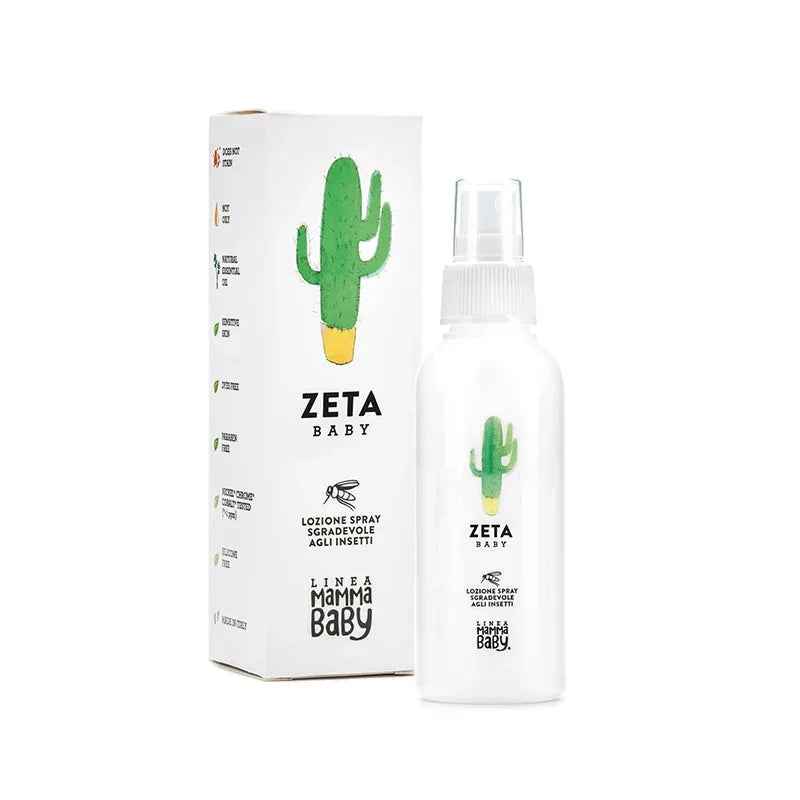
- Linea MammaBaby Zeta Baby Zenino – a natural lotion with essential oils to help keep insects away (reapply as needed),
- Linea MammaBaby Post Zeta Baby gel – a soothing aloe vera gel for itching after mosquito bites or contact with nettles or jellyfish.
Both are in our mosquito and insect collection and in the Linea MammaBaby range. Skin care does not replace first aid or a medical check. To protect your child's eyes in the sun, also read Kids' Sunglasses: UV400, Filter Category and Size by Age.
FAQ
Should I put oil on a tick before removing it?
No. Do not put anything on the tick. Remove it as soon as possible with tweezers, pulling slowly upwards.
What if the tick's head stays in the skin?
Clean the area and keep an eye on it. If a spreading rash or a fever appears, see a doctor.
Should I cool a jellyfish sting with ice?
No. The NHS advises rinsing with seawater and soaking in very warm water (check the temperature), not cooling it.
Should I remove a bee sting with tweezers?
Better not. Scrape it out sideways with a fingernail or card edge so you do not squeeze in more venom.
Does my child need the TBE vaccine?
If you live in or holiday in a TBE risk area and spend time outdoors, discuss it with your child's doctor. The vaccine needs several doses.
Sources
- NHS – Insect bites and stings
- NHS – Jellyfish and other sea creature stings
- NHS – Lyme disease
- ECDC – Tick-borne encephalitis
This content is for information only and does not replace advice from your child's doctor.



